
Moving Contact Rivets are precision electrical contact components designed to help control and switch electrical power in devices such as contactors, circuit breakers, starters, temperature controllers, switches, and relays. With more than 12 years of manufacturing experience, INT develops customized moving contact rivets using silver-based contact materials and copper or copper-nickel base materials for demanding OEM and ODM applications.
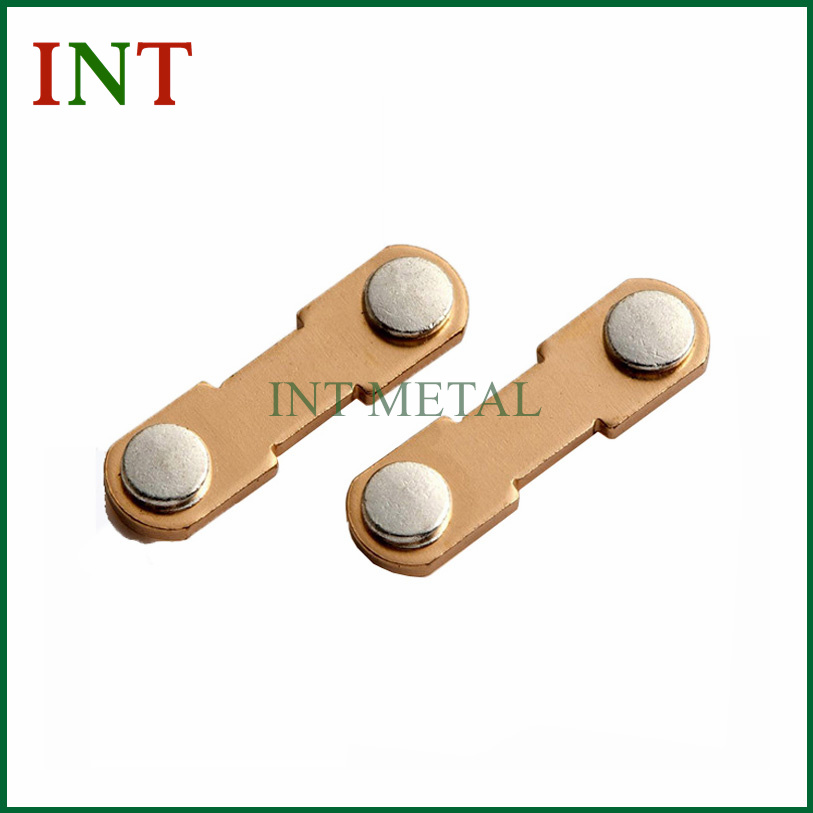
Moving contact rivets are specialized electrical contact components installed on moving conductive parts of switching mechanisms. During operation, the moving contact approaches or separates from a stationary contact to establish or interrupt an electrical circuit.
This movement makes the contact surface particularly important. Every switching cycle can generate electrical arcing, mechanical impact, friction, and heat. A properly engineered contact rivet therefore needs to provide a stable electrical interface while maintaining mechanical integrity throughout repeated operation.
In practical applications, moving contact rivets can directly or indirectly control electrical power through switching mechanisms. They are especially relevant to small- and medium-current electrical equipment where reliable switching and compact component dimensions are required.
Material selection is one of the most important factors when designing moving contact rivets. The contact face must balance electrical conductivity, resistance to electrical wear, resistance to welding, thermal behavior, and compatibility with the operating environment.
According to the available INT product information, commonly used contact-face materials include Ag, AgNi, AgCdO, AgSnO2, AgSnO2In2O3, and AgZnO. Copper and copper-nickel are used as common base materials.
| Material Category | Typical Material | Primary Consideration |
|---|---|---|
| Silver | Ag | Electrical conductivity and contact performance |
| Silver Nickel | AgNi | Electrical and thermal performance with good arc resistance |
| Silver Cadmium Oxide | AgCdO | Resistance to electrical wear and fusion welding |
| Silver Tin Oxide | AgSnO2 | Suitable for demanding switching applications |
| Base Material | Cu / CuNi | Mechanical support and conductive connection |
The correct material should be selected according to current level, switching frequency, voltage, load characteristics, thermal conditions, mechanical requirements, and the expected service life of the final electrical device.
The compact structure of moving contact rivets makes them suitable for a wide range of electrical switching components. They are mainly associated with small- and medium-current applications.
For engineers and procurement teams, the application should always be considered together with electrical load and mechanical movement. A contact rivet that performs well in one switching device may not be appropriate for another design without adjusting the material or dimensions.
Dimensional accuracy is critical because the rivet must fit the moving contact assembly correctly. INT provides customized dimensions, with representative specifications covering head diameters from approximately 2.5 mm to 8 mm.
| Parameter | Representative Range | Typical Tolerance |
|---|---|---|
| Head Diameter | 2.5–8 mm | ±0.10 mm |
| Head Thickness | Approx. 0.6–2.0 mm | ±0.05 mm |
| Contact Layer Thickness | Approx. 0.3–0.7 mm | ±0.05 mm |
| Shank Diameter | Approx. 1.2–4 mm | ±0.05 mm |
| Shank Length | Approx. 1–4 mm | ±0.15 mm |
These values should be treated as representative rather than universal design limits. For production projects, buyers should provide drawings, samples, technical documents, electrical requirements, and assembly conditions so the supplier can confirm the appropriate specification.
Manufacturing electrical contact rivets requires controlled forming, material selection, dimensional management, and inspection. Because the component is small, even minor dimensional deviations can affect assembly alignment and contact performance.
A professional manufacturing workflow generally focuses on the following areas:
For high-volume electrical component manufacturing, consistent production is just as important as the nominal specification. Stable dimensions and repeatable material performance help reduce assembly variation and support predictable product quality.
Choosing a suitable moving contact rivet should begin with the actual operating conditions rather than simply selecting a standard size. Procurement teams can use the following checklist:
Working with a manufacturer capable of OEM and ODM production can simplify this process. INT states that it can manufacture parts according to customer drawings or technical documents and can recommend suitable materials according to application requirements.
When sourcing moving contact rivets from a China manufacturer or electrical contact supplier, buyers should look beyond unit price. Long-term reliability depends on engineering support, material consistency, dimensional control, documentation, packaging, and delivery capability.
INT reports more than 12 years of contact rivet manufacturing experience and ISO9001 certification. Its product information also indicates support for OEM and ODM projects, customized dimensions, sample requests, and delivery options by air, express, or sea.
For international procurement, packaging is also important because moving contact rivets are small precision components. INT describes packaging quantities of approximately 500–5,000 pieces in small plastic or vacuum plastic bags, followed by individual cartons and hard cardboard outer packaging.
For buyers comparing manufacturers, a reliable supplier should be able to provide:
They are mainly used in electrical switching equipment such as contactors, circuit breakers, starters, temperature controllers, switches, and relays, particularly in small- and medium-current applications.
Common contact-face materials include Ag, AgNi, AgCdO, AgSnO2, AgSnO2In2O3, and AgZnO. Common base materials include copper and copper-nickel. The best selection depends on the electrical and mechanical requirements of the application.
Yes. Dimensions can be customized according to customer drawings, samples, or technical documents. Customization can cover important dimensions such as head diameter, head thickness, contact-layer thickness, shank diameter, and shank length.
According to INT's product information, samples may be provided. In-stock samples can be free of charge, while samples that require manufacturing may involve production costs.
INT indicates an electrical contact delivery time of approximately 15–25 days, depending on raw material conditions. The actual lead time should be confirmed for each project based on material availability, order quantity, customization, and production requirements.
High-quality Moving Contact Rivets play an important role in achieving stable electrical switching, mechanical reliability, and long-term component performance. Selecting the right contact material, base material, dimensions, tolerances, and manufacturing partner can significantly reduce design and production risks. With customized manufacturing, OEM/ODM support, material selection assistance, and experience in electrical contact production, INT provides an option for businesses sourcing precision contact components for industrial electrical applications. If you are developing a new switching device or looking for a reliable China supplier for customized moving contact rivets, contact us to discuss your drawings, specifications, sample requirements, and production needs.